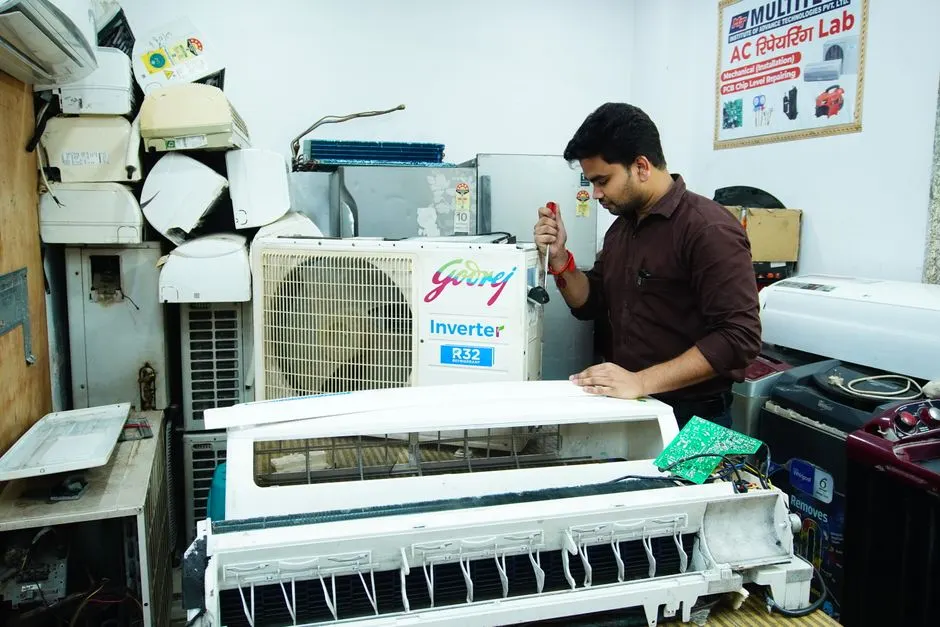
Electronic leak detection, nitrogen pressure testing, and permanent repairs
Refrigerant leak detection azusa CA that finds the leak first time
If your AC is blowing warm air or your energy bill jumped, refrigerant leak detection azusa CA is the fastest way to stop the guesswork. We pressure-test the line set, scan the evaporator and condenser coils with electronic detectors, and repair the leak instead of just topping off the charge. Homeowners, landlords, and property managers across Azusa call us because we find the leak the first visit and fix it the same day.
What refrigerant leak detection azusa CA actually involves
Refrigerant leak detection azusa CA is a diagnostic service that pinpoints where refrigerant is escaping from your air conditioning system, then repairs it so the system holds a proper charge. We connect a manifold gauge set to read suction and liquid pressures, compare them against the manufacturer's target for the outdoor temperature, and confirm a low charge. From there we use an electronic leak detector, UV dye, and nitrogen pressure testing to isolate the exact failure point, whether it is a pinhole in a copper line set, a rubbed joint behind the cabinet, or a corroded evaporator coil.
Azusa sits in the San Gabriel Valley where summer highs push past 100F and the equipment runs hard from May through October. That constant runtime stresses every braze joint and Schrader valve in the system. When you search for ac refrigerant leak repair near me azusa, you are usually dealing with a unit that has lost 10 to 30 percent of its R-410A charge over a season or two. We see the same pattern in older Foothill Boulevard corridor homes with original 1990s line sets. Our job is to find the leak, repair it, and verify the system holds vacuum before we recharge.
What our refrigerant leak detection and repair includes
Every leak call includes a full diagnostic, not just a pressure reading. We test the whole system, document what we find, and give you a flat price for the repair before we start. If the leak turns out to be something else, like a bad capacitor or a clogged drain line, we tell you and quote that instead.
01
✓
Full pressure diagnostic
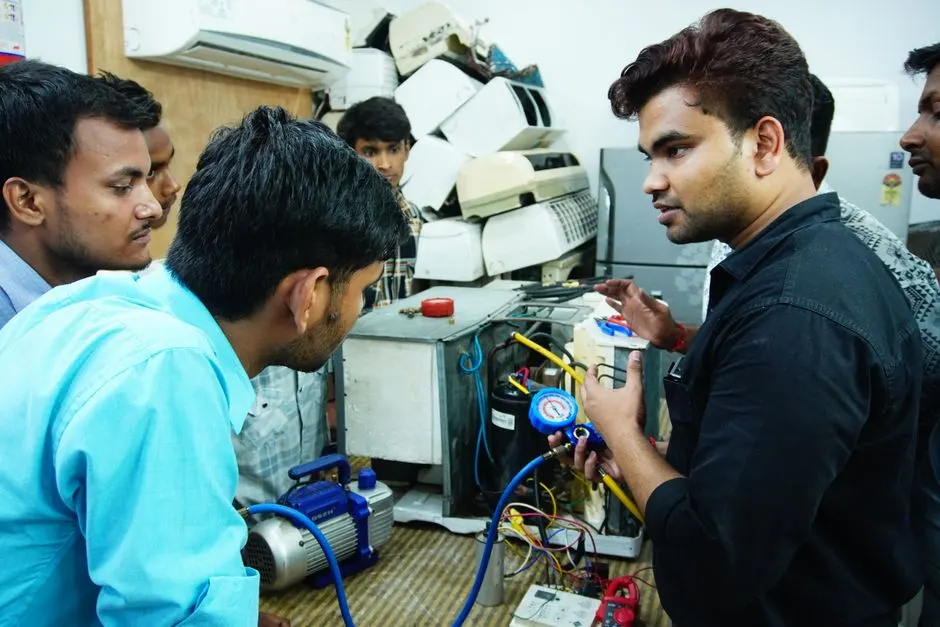
We connect a manifold gauge set and read suction and liquid pressures against the manufacturer's chart for the outdoor temperature. Superheat and subcooling calculations confirm whether the system is low on charge or has a different problem.
02
✓
Electronic leak scan
We scan the evaporator coil, condenser coil, line set, and every braze joint with an electronic leak detector. Any hit is verified with UV dye or a second method so we are not chasing a false positive.
03
✓
Nitrogen pressure test
For leaks that are hard to isolate, we pressurize the system with nitrogen to 300 to 500 PSI and hold it for 30 minutes. This finds leaks that electronic detectors miss, especially in buried line sets.
04
✓
Repair and parts
We braze joints with a torch kit, replace Schrader valves, swap sections of copper line set, or replace coils. Common parts for Carrier, Trane, Lennox, Goodman, Rheem, and York systems are on the truck.
05
✓
Vacuum and recharge
After the repair we pull a vacuum to 500 microns with a vacuum pump and micron gauge, hold it for 15 minutes, then recharge by weight with a refrigerant scale using the correct refrigerant for your system.
06
✓
Written documentation
You get a record of the leak location, the repair performed, the final charge weight, and the pressure readings. That documentation is useful for warranty claims and for the next technician who works on the system.
How it works
How our leak detection and repair process works
We start by reading pressures with a manifold gauge set and checking superheat and subcooling against the manufacturer's chart. A clamp meter on the compressor tells us how hard it is working. This takes about 20 minutes and confirms whether you have a low charge or a different problem like a bad capacitor or a failing blower motor.
We scan the evaporator coil, condenser coil, line set, and all braze joints with an electronic leak detector, then verify with UV dye or nitrogen pressure testing. If the leak is inside a wall or ceiling chase, we use a tube cutter and flaring tool to open the line set for inspection. This is the step that separates a real repair from a guess.
Depending on what we find, we braze a new joint with a torch kit, replace a Schrader valve, swap a section of copper line set, or replace the evaporator coil. We carry common Carrier, Trane, Lennox, Goodman, Rheem, and York parts on the truck, so most repairs finish the same day.
After the repair we pull a vacuum to 500 microns with a vacuum pump and micron gauge, then hold it for 15 minutes to confirm no moisture or leaks remain. We recharge by weight using a refrigerant scale with R-410A, R-32, or R-454B, whichever your system uses, and log the exact charge on your invoice.
We run the system for 20 to 30 minutes, recheck pressures and temperature split across the evaporator coil, and confirm the thermostat is holding setpoint. You get a written record of the leak location, the repair, and the final charge so the next technician knows exactly what was done.
STEP 01System check
We start by reading pressures with a manifold gauge set and checking superheat and subcooling against the manufacturer's chart. A clamp meter on the compressor tells us how hard it is working. This takes about 20 minutes and confirms whether you have a low charge or a different problem like a bad capacitor or a failing blower motor.
Tools & methods
Tools and methods we use on every leak call
01
✓
Manifold gauge set
Reads suction and liquid pressures so we can calculate superheat and subcooling and confirm whether the system is low on charge.
02
✓
Electronic leak detector
Scans coils, line sets, and braze joints for refrigerant molecules. It is the fastest way to narrow down a leak location before we confirm with a second method.
03
✓
Nitrogen pressure test kit
Pressurizes the system to 300 to 500 PSI and holds it for 30 minutes. This finds leaks that electronic detectors miss, especially in buried line sets.
04
✓
Vacuum pump and micron gauge
Pulls the system down to 500 microns and holds it for 15 minutes. This removes moisture and confirms the repair is airtight before we recharge.
05
✓
Refrigerant scale
Measures the exact weight of refrigerant going into the system so the charge matches the manufacturer's spec, not an estimate.
06
✓
Recovery machine
Recovers existing refrigerant per EPA Section 608 rules before we open the system for repair. Nothing vents to the atmosphere.
Real results
Before and after.
Refrigerant Leak Detection & Repair
Warm air fixed in one visit
A homeowner in Downtown Azusa had an AC blowing warm air for three days. Two previous companies had added refrigerant without finding the leak. Pressures were 20 percent below spec and the electric bill had climbed $80 in one month.
After: We pressure-tested with nitrogen, found a pinhole in the evaporator coil, replaced the coil with an AHRI-certified match, pulled a vacuum to 500 microns, and recharged by weight. The system hit a 20F temperature split across the coil and has held its charge for two summers.
A landlord in the Citrus Avenue Corridor had a rental unit that needed refrigerant added every spring for three years. Each top-off cost $250 to $350 and the leak kept getting worse. The tenant had filed two no-cooling complaints in one summer.
After: We found a leaking Schrader valve and a loose flare fitting on the line set. Both were repaired in a single visit, the system was recharged by weight, and the unit has not needed refrigerant since. The landlord saved roughly $300 a year in top-offs.
A homeowner in the Azusa Foothills called when their system started short cycling. The compressor was running hot and the system had lost about 25 percent of its R-410A charge. A compressor replacement would have run $1,800 to $2,600.
After: We found a leaking braze joint on the line set, repaired it, pulled a deep vacuum, and recharged to the factory spec. Compressor amp draw returned to normal and the system has run two full summers without a repeat issue.
We read pressures with a manifold gauge set, confirm low charge, then scan with an electronic leak detector. Once we find and repair the leak, we pull a vacuum and recharge by weight so the system cools like it should.
↗02
Ice on the copper line set or evaporator coil
We shut the system down, thaw the coil, and test for both low charge and airflow restrictions. A leak is often the cause, but a clogged filter or failing blower motor can do the same thing. We fix the actual cause.
↗03
Refrigerant has to be added every season
We pressure-test with nitrogen to find the leak instead of topping off again. Most repeat top-off systems have a leaking evaporator coil or a bad Schrader valve, and both are repairable.
↗04
Compressor short cycling or failing to start
We test compressor amp draw with a clamp meter and check windings before recommending a repair. If the compressor is still healthy, we fix the leak and recharge. If it is not, we quote replacement honestly.
↗
Proof you can check
Licensed, certified, and reviewed
EPA Section 608 Universal Certification · U.S. Environmental Protection Agency
NATE Certification · North American Technician Excellence
California Contractor License C-20 (HVAC) · California State License Board
AHRI Certification · Air-Conditioning, Heating, and Refrigeration Institute
OSHA Safety Certification · Occupational Safety and Health Administration
Customer reviews
What Azusa customers say about our leak repair
★★★★★
“Our AC was blowing warm air and the electric bill jumped $70 in one month. The technician found a leak at a braze joint on the line set, brazed it, pulled a vacuum, and recharged the system the same afternoon. That was two summers ago and it is still holding. He showed me the pressure readings before and after.”
MG
Maria G.Homeowner, Downtown Azusa
✓ Verified
“
★★★★★
“I manage four rental units and one had a slow leak that three other companies just kept topping off. Azusa Breeze pressure-tested with nitrogen, found a pinhole in the evaporator coil, and replaced it. No more service calls on that unit. They also checked the other three while they were there.”
DR
Daniel R.Landlord, Citrus Avenue Corridor
✓ Verified
★★★★★
“Called on a Saturday morning when our system stopped cooling. They had a tech out by early afternoon, found a leaking Schrader valve, and had us cooling again before dinner. Fair price, no pressure to replace the whole system, and they cleaned up after themselves. I have already recommended them to two neighbors.”
Most leak detection calls in Azusa run $180 to $350 for the diagnostic, which includes pressure testing, electronic leak scanning, and a written finding. If we find the leak and you approve the repair, we credit part of that diagnostic toward the repair cost. Repairs themselves range from $250 for a Schrader valve or braze joint up to $1,400 or more if the evaporator coil needs replacement.
The three clearest signs are warm air from the vents, ice on the copper line set or evaporator coil, and a compressor that runs constantly without hitting setpoint. A rising electric bill with no change in usage is another clue. If you see any of these, shut the system off and call us. Running a low-charge system can destroy the compressor in a matter of weeks.
A simple braze joint or Schrader valve repair takes two to three hours including vacuum and recharge. An evaporator coil replacement runs four to six hours because the coil has to come out of the air handler. If the leak is in a line set buried behind drywall, we may need a second visit after the wall is opened, and we will tell you that upfront.
Yes. We run a 24/7 line for no-cooling emergencies, and we treat refrigerant leaks as priority calls because a system running low can fail completely. Call (626) 765-0724 any time, and we will dispatch the nearest technician. For most Azusa addresses we can be on site within a few hours, including nights and weekends.
Get refrigerant leak detection azusa CA before the compressor fails
A low-charge system can destroy a compressor in a few weeks of summer runtime. Call (626) 765-0724 and we will pressure-test your system, find the leak, and give you a flat price for the repair before we start. Same-day service across Azusa and Los Angeles County.
Call (626) 765-0724 or email info@azusabreezehvac.com and we will get you on the schedule. We answer the phone seven days a week, run emergency calls around the clock, and aim to have a tech at your door the same day for no-cool calls across Azusa and Los Angeles County.